Tag: #digitalmarketing

The Role of AI and Machine Learning in Digital Marketing

In the ever-evolving landscape of digital marketing, staying ahead of the competition requires not only creativity and strategic thinking but also the harnessing of cutting-edge technologies. Among these technologies, Artificial Intelligence (AI) and Machine Learning (ML) have emerged as game-changers, revolutionizing the way businesses connect with their audiences. In this article, we’ll delve into the profound role that AI and ML play in digital marketing and how they are reshaping the industry.

Understanding AI and ML

Before we explore their role in digital marketing, let’s clarify what AI and ML entail:

Artificial Intelligence (AI): Artificial Intelligence refers to the simulation of human intelligence in machines. It encompasses a wide range of technologies, including natural language processing, speech recognition, computer vision, and more. In digital marketing, AI is primarily used to analyze data, make predictions, and automate tasks.

Machine Learning (ML): ML is a subset of AI that focuses on the development of algorithms and statistical models that enable machines to improve their performance on a specific task through learning from data. It’s the engine that powers AI applications.

Personalized Customer Experiences

One of the most noticeable impacts of AI and ML in digital marketing is the ability to create highly personalized customer experiences. These technologies analyze vast amounts of data, such as browsing behavior, purchase history, and demographic information, to segment audiences effectively. By understanding customer preferences and behavior patterns, marketers can tailor content, recommendations, and offers, increasing the chances of conversion.

Predictive Analytics for Better Decision-Making

AI-driven predictive analytics allows marketers to forecast future trends and consumer behavior accurately. By analyzing historical data, AI can provide insights into which marketing strategies are likely to be most effective in the future. This foresight enables businesses to allocate resources more efficiently and optimize their marketing campaigns for maximum impact.

Chatbots and Customer Support

AI-powered chatbots have become an essential part of customer support and engagement. They provide immediate responses to customer inquiries, resolve issues, and even assist in making product recommendations. This not only enhances the customer experience but also frees up human resources for more complex tasks.

Content Creation and Optimization

AI algorithms can generate content, such as product descriptions, blog posts, and social media updates, at a scale and speed that would be impossible for humans alone. ML helps in optimizing content for search engines, ensuring it ranks well and attracts organic traffic.

Email Marketing and Automation

AI and ML automate email marketing by segmenting lists, personalizing email content, and determining the best times to send messages. This level of automation boosts email open rates, click-through rates, and ultimately, conversions.

Fraud Detection and Prevention

In the realm of online advertising, Artificial Intelligence and ML are vital for fraud detection and prevention. They analyze vast volumes of data in real-time to identify and block fraudulent activities, ensuring that ad budgets are not wasted on fake clicks or impressions.

The Future of Digital Marketing

As Artificial Intelligence and ML continue to advance, their role in digital marketing will only become more significant. Marketers who embrace these technologies gain a competitive edge by delivering highly relevant content and experiences to their audiences, making data-driven decisions, and optimizing their efforts for maximum ROI.

In conclusion, Artificial Intelligence and ML are transforming digital marketing by enabling personalization, predictive analytics, automation, and improved decision-making. To stay relevant and effective in the digital landscape, businesses must incorporate these technologies into their marketing strategies. The era of data-driven, AI-powered marketing has arrived, and those who harness its potential will thrive in the evolving digital ecosystem.

SEO in a Post-Google World: Navigating the Future of SEO

The digital landscape is evolving at a rapid pace, and the world of search engine optimization (SEO) is no exception. As we venture into what can be aptly described as a “Post-Google World,” the traditional SEO strategies that businesses have relied on for years are undergoing significant transformations. In this article, we’ll explore the changing landscape of SEO, what it means for your business, and how to adapt to stay ahead in the game.

The Google Era

For over two decades, Google has reigned supreme as the dominant search engine. Optimizing for Google’s algorithms has been the focal point of SEO efforts for businesses worldwide. Google’s algorithms, such as PageRank and the more recent BERT, have determined search engine rankings, influencing how websites structure their content and build backlinks.

However, the Post-Google World signifies a shift in the way people search for information. While Google remains a vital player, new search avenues and technologies have emerged.

  1. Voice Search and AI Assistants: With the proliferation of voice-activated devices like Amazon’s Alexa and Apple’s Siri, users are conducting searches using natural language. This demands a shift from keyword-centric SEO to more conversational, long-tail keyword optimization.
  2. Visual Search: Visual search engines like Pinterest and Google Lens allow users to search for information using images. This trend necessitates image optimization and the use of alt text for SEO.
  3. Video Search: YouTube, the second-largest search engine, is growing exponentially. Incorporating video SEO, like optimizing video titles, descriptions, and thumbnails, is essential.
  4. Mobile-First Indexing: Google has shifted to mobile-first indexing, prioritizing the mobile version of websites. Responsive design and mobile optimization are now critical.
  5. Local SEO: For businesses with physical locations, local search engine optimization is increasingly important as users search for nearby products and services.

The Future of SEO

  1. User Experience (UX): Search engines are emphasizing user experience more than ever. Page speed, mobile-friendliness, and clean website design are crucial for SEO success.
  2. Content Quality: High-quality, authoritative, and relevant content will remain a cornerstone of SEO. Focus on creating in-depth, valuable content that answers user queries.
  3. Schema Markup: Implement schema markup to provide search engines with structured data, making your content more accessible in various search formats.
  4. Featured Snippets and Rich Results: Optimize content for featured snippets, as they dominate search results and can drive significant organic traffic.
  5. AI and Machine Learning: Leverage AI tools for keyword research, content generation, and predictive analytics to stay competitive.
  6. Privacy and Data Security: With growing concerns about online privacy, securing user data and complying with regulations like GDPR is non-negotiable.

Conclusion

The Post-Google World represents both challenges and opportunities for SEO. While Google remains a central figure in online search, diversifying your SEO strategy to accommodate new search technologies and user behaviors is essential for long-term success. Embrace voice search, visual search, and video content, and prioritize user experience and content quality.

As we move forward, staying adaptable and continuously learning about emerging trends and technologies will be the key to thriving in this evolving SEO landscape. SEO in a Post-Google World is about more than just rankings; it’s about understanding and meeting the evolving needs of your audience in a digital world that’s more diverse and dynamic than ever before.

The ROI of Pay-Per-Click (PPC) Advertising: Maximizing Your Digital Ad Campaigns

In the fast-paced world of digital marketing, Pay-Per-Click (PPC) advertising has emerged as a powerful tool for businesses to reach their target audience, drive traffic, and achieve tangible results. The ability to pay only when an interested user clicks on your ad makes PPC a cost-effective choice, but the true value lies in its potential Return on Investment (ROI). In this article, we delve into the intricacies of PPC advertising and uncover strategies to maximize your ROI for a campaign that truly delivers

Understanding the Core of PPC Advertising:

PPC advertising is a digital marketing strategy where businesses bid for ad placement on search engines and platforms. These ads are displayed when specific keywords related to their products or services are searched, ensuring a highly relevant audience. The key concept here is that you only pay when someone clicks on your ad, making it an efficient way to allocate your marketing budget.

Calculating ROI in PPC Advertising:

Return on Investment (ROI) in PPC advertising involves comparing the revenue generated against the costs incurred. The formula is simple:

ROI = (Revenue – Cost) / Cost * 100

When you invest in PPC, the revenue can come from direct sales, leads generated, or other measurable actions. Understanding this equation is crucial, as a positive ROI indicates that your PPC campaign is yielding more revenue than you’re spending.

Strategies for Maximizing PPC ROI:

  1. Keyword Research and Selection:
    Target the right keywords to ensure your ads appear to an audience actively seeking your products or services. Utilize keyword research tools to identify relevant, high-converting keywords that align with your campaign goals.
  2. Ad Copy Optimization:
    Craft compelling ad copy that resonates with your audience. Highlight unique selling points, use clear calls-to-action (CTAs), and align the copy with the landing page to ensure a seamless user experience.
  3. Landing Page Optimization:
    The landing page is where conversions happen. Make sure it’s optimized for the specific keywords and ads, and offers valuable content or solutions to the user’s query. A responsive design, fast loading times, and clear conversion paths are essential.
  4. Audience Targeting:
    Use advanced targeting options to narrow down your audience based on demographics, interests, behaviors, and even location. Tailoring your ads to a specific audience increases the chances of conversion.
  5. Ad Extensions:
    Enhance your ads with extensions that provide extra information, such as site links, callouts, and reviews. These extensions improve ad visibility and provide more context to users.
  6. A/B Testing:
    Continuously test different elements of your ads, such as headlines, ad copy, and CTAs. A/B testing helps identify what resonates best with your audience and can lead to improved click-through rates (CTR) and conversions.
  7. Monitoring and Optimization:
    Regularly monitor your campaigns’ performance. Adjust bids, pause underperforming keywords, and allocate more budget to high-performing ones. Continuous optimization is key to maximizing ROI.

Conclusion:

Pay-Per-Click (PPC) advertising isn’t just about clicks – it’s about making those clicks count. With a strategic approach, comprehensive research, and ongoing optimization, businesses can not only achieve a positive ROI but also build a sustainable channel for driving traffic, conversions, and growth. By focusing on the synergy between relevant keywords, compelling ad content, and optimized landing pages, you can unlock the full potential of PPC advertising and propel your digital marketing efforts to new heights of success.

Analytics and Reporting: Unveiling the Path to Measuring Digital Marketing Success

In the ever-evolving landscape of digital marketing, data has emerged as the compass guiding businesses towards success. With analytics and reporting, marketers gain the power to uncover insights, make informed decisions, and refine strategies for optimal results. In this article, we delve into the importance of analytics and reporting in measuring digital marketing success.

The Foundation of Success: Why Analytics Matter

Analytics isn’t just about numbers; it’s about deciphering the story behind those numbers. It’s about understanding your audience, their behavior, and how they interact with your digital presence. Here’s why analytics are indispensable for digital marketing success:

  1. Data-Driven Decision Making: Analytics empower marketers to make decisions grounded in real data rather than assumptions. This minimizes guesswork and maximizes results.
  2. Understanding Audience Behavior: From page views to click-through rates, analytics unveil how users navigate your website, interact with content, and convert. This information is invaluable for refining user experience.
  3. Measuring Campaign Effectiveness: Whether it’s a social media campaign or an email marketing effort, analytics provide insights into what’s working and what’s not. Adjustments can be made on the fly to optimize campaigns.
  4. ROI Assessment: By tracking conversions, sales, and customer acquisition costs, analytics allow you to calculate the return on investment (ROI) of your marketing efforts.

Essential Metrics for Measuring Success

When it comes to measuring digital marketing success, an array of metrics is available. The key is selecting the ones that align with your goals. Here are some essential metrics:

  1. Website Traffic and Sources: Monitor the number of visitors, where they come from, and which sources bring the most traffic. This helps allocate resources effectively.
  2. Conversion Rate: Track the percentage of visitors who take a desired action, such as making a purchase or signing up for a newsletter.
  3. Bounce Rate: This reveals the percentage of visitors who leave your site after viewing only one page. A high bounce rate might indicate issues with content or user experience.
  4. Click-Through Rate (CTR): Measure the effectiveness of your ads or email campaigns by tracking the percentage of clicks compared to impressions.
  5. Social Media Engagement: Analyze likes, shares, comments, and retweets to gauge how well your content resonates with your audience.
  6. Customer Acquisition Cost (CAC): Determine how much it costs to acquire a new customer. Compare this to the customer’s lifetime value to assess your marketing ROI.

Setting Up Effective Reporting

To ensure meaningful insights, your reporting process must be structured and focused. Here’s a roadmap to set up an effective reporting system:

  1. Define Objectives: Clearly define your goals and objectives for each campaign or marketing effort. What do you want to achieve?
  2. Select Relevant Metrics: Choose metrics that align with your goals. For instance, if brand awareness is your focus, social media engagement metrics are crucial.
  3. Choose Reporting Tools: Utilize a combination of web analytics tools (e.g., Google Analytics), social media insights, and marketing automation platforms for comprehensive reporting.
  4. Create Custom Dashboards: Build custom dashboards that display the most relevant data for your goals. This simplifies the reporting process and allows for quick assessment.
  5. Regular Analysis: Set a regular reporting schedule to track progress over time. Analyze trends, identify patterns, and make data-driven adjustments to your strategies.

Conclusion

Analytics and reporting are the bedrock of effective digital marketing. They illuminate the journey customers take from discovery to conversion, helping you refine your strategies for maximum impact. By harnessing the power of data, you can navigate the intricate world of digital marketing with confidence, delivering results that drive business growth.

Long-tail Keywords: Strategies, Tips, and More

If they’re coming to your site from search engines, they’re probably looking for long-tail keywords. This free traffic is a major benefit for your business, and knowing how to properly integrate long-tail keywords will help you achieve it.
Long-tail keywords, when used in collaboration with your team, can easily capture those extra clicks.

You’ll see a rise in search traffic, gain paying consumers, and expand your brand if you routinely post in-depth content targeting long-tail keywords.

We do not have any ownership to this image.

So, let us get started and learn how to use long-tail keywords.
What Exactly Are Long-Tail Keywords?
They are long, specialized inquiries that tell search engines not just what words searchers want to know about, but also why.
When conducting keyword research, it’s natural to incline toward short tail or head keywords. These are keywords such as “SEO” or “keywords,” which are likely to have a high search traffic and hence draw the attention of many marketers.


Why Should Long-Tail Keywords Be Included in Your Blog Posts?
The first thing that comes to mind is most likely traffic. Following that, you want conversions. Long-tail keywords might provide you with both.

Paid advertising is an excellent approach to reach your target audience, but there is a catch. You are charged for each click.
Long-tail keywords indicate that a searcher is well on their way to conversion, which is a very compelling reason to employ them in your content.

What Factors Influence the Ranking of Long-Tail Keywords?
The answer is actually rather straightforward: relevance and specificity. When consumers conduct an online search, they are frequently seeking for a specific answer to a specific problem or need.
Google employs up to 200 criteria to decide how relevant, useful, and authoritative your page is for a specific term when consumers type a keyword or search phrase into the box.

Long-tail keywords that are more specialized and targeted to these demands are more likely to meet the searcher’s purpose, resulting in a higher ranking in search results.

User interaction with your content is another aspect that helps these keywords rank.

If your blog post or web page has useful information that matches the user’s search intent, they are more likely to stay on your site, read your material, and share it with others. This can provide favorable signals to search engines that your material is of high quality and relevant, boosting your ranks for these keywords.

We bring a rich experience and innovation in the manner in which we conduct our business. If your strategies are no longer working then it’s time to allow Fun Media team to handle your digital marketing. If you’re looking to capture and convert more leads, then let’s handle it for you. Worry about other aspects of your business. Do you feel like you’re not getting a Return on Your Investment? Let’s turn things around. We have worked with corporations and SME’s as well as individual businesses. We are waiting for you. Talk to us on help@funmedia.co.ke

Traditional Marketing Mix – The 4 Ps of Marketing

What is the traditional marketing mix? The traditional marketing mix model (also known as the 4Ps) can be used to assist marketers in defining their marketing strategy.

use this method to try to generate the best response in their target market by optimally combining 4 (or 5 or 7) variables. It’s important to understand that marketing mix principles are variables you can control. The marketing mix can be adjusted regularly to meet the changing needs of your target audience and other dynamics in your marketing environment.

  1. Marketing “P” – Product

Customer Touchpoints – Functionality; Quality; Look; Packaging; Brand; Service; Support; Products should fit the tasks consumers want to do, perform well, and be what consumers expect. Apart from that, we have to consider that while we are manufacturing a product, the consumer must be willing or able to pay for it. lead to decline.

  1. Marketing “P” – Price

Customer Touchpoints – List Prices; Discounts; Financing; Leasing Options;

It is important to assess how much your target customers are willing to pay for your product. Consumers are now very price sensitive. In markets like India, consumers want the best value for money, but competitively low prices can be seen as low quality. Therefore, marketers should establish the ideal pricing structure to make the most of the product lifecycle. Pricing is important not only for end users, but also for distributors who need to expand the reach of their products and earn decent money for their efforts.

  1. Marketing “P” – Location

Customer Touchpoints – Location; Logistics; Channel Members; Channel Motivation; Market Reach; Service Level; Products must be available in the right quantity at the right place at the right time. Product placement is heavily influenced by pricing structure and distributor enthusiasm for the product.

  1. The “P” in Marketing – Promotion

Customer touchpoints – advertising; public relations; news; direct sales; sales; media; budgets.

Educating customers about your product is important. Communications are about the need for the product, the benefits of the product, or the use of the product. Any form of notice indicates a product recall and should be used with caution. A small change in how you communicate about your product can make a big difference to your sales. 

Why Email Marketing Should Be Included in Your Digital Strategy

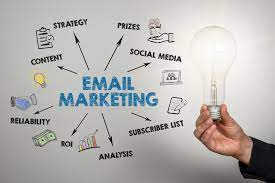
The practice of sending out promotional emails in bulk is known as email marketing. It frequently aims to create leads or sales and could include advertising. It’s time to review your digital marketing approach if you’ve been ignoring email marketing.

Businesses that use email marketing effectively see significant returns; it is inexpensive and doesn’t need to be overly difficult.

Prospects are converted into customers with effective email marketing, and one-time purchases are transformed into loyal, repeat customers. One of the finest ways to stay in touch with current customers and be at the forefront of potential consumers’ minds who might require your products or services in the future is through email marketing.
Why email marketing should be a part of your digital strategy.
The following are some of the main justifications for why email is such a potent communication tool:

Email is Private
Through email, you can access a user’s inbox. Your reach is not constrained by a rating system. It is frank and intimate.

Email Serves a Purpose
A user submits a form to join your email list and confirm their email address in order to get updates from you. Someone who puts in this kind of effort is undoubtedly interested in you and is therefore lot more receptive to your message.

Email is Personalized
The user has already expressed interest in your service or content, as we previously said. You may send them extremely relevant offers because you already know what they enjoy to achieve greater outcomes. We shall discuss segmentation—what this is—later in the article.

Email Delivers: While only 2% of your Facebook fans see your postings in their News Feed, an incredible 90% of emails are delivered to the mailbox of the intended recipient. This is because Facebook attempts to encourage brands to use their paid advertising options by limiting the number of times your posts can be seen in the News Feed.

Have you capitalized on email marketing in your business? If not, you are missing out on one of the most excellent digital marketing strategies that will lead to your brand recognition, build a relationship with your clients and drive your sales up. Fun Media Company focuses on constructing and delivering successful email campaigns on your behalf. These campaigns help retain your customers, engage your prospects, and drive sales and traffic.

Email Marketing Trends To Boost Engagement For 2023

Have you capitalized on email marketing in your business? If not, you are missing out on one of the most excellent digital marketing strategies that will lead to your brand recognition, build a relationship with your clients and drive your sales up. Fun Media Company focuses on constructing and delivering successful email campaigns on your behalf. These campaigns help retain your customers, engage your prospects, and drive sales and traffic.

  1. Evaluate Your Results
    Measuring the effectiveness of your email marketing is not a 2023-only practice. It need to be one of your yearly objectives. You won’t be able to set achievable goals for the remainder of the year if you don’t take the time to crunch your figures. This data will not only help you gauge how you compare to your rivals, but it will also enable you to pinpoint particular areas for improvement.
    The following are some critical email benchmarks that you should be aware of:

Open rate
Click-through rate
Click-to-open rate
Unsubscribe rate

  1. Improve Your Audience Understanding
    We frequently discuss how crucial it is to pinpoint your target market. Finding your target market is typically the first step in any internet business venture, whether you’re extending your product line or starting from scratch.

Make it a top point to understand your audience in 2023, though. Make sure you understand not only who they are but also what drives them.

  1. Be More Open-Minded
    The quest for sustainability has a significant impact on the retail industry in 2022. Customers desire to know the details.However, sustainability encompasses much more than just environmental effects. Your social obligation to consumers is another consideration. Consumers value ethical marketing, as evidenced by the reaction that Facebook faced after choosing to prioritize growth over the security of its users.
  2. Encourage UGC
    Utilizing user-generated content (UGC) in your digital marketing initiatives has many benefits, one of which is that it strengthens the credibility of your company. If buyers can verify for themselves how other customers have dealt with your brand, it makes it much easier for them to trust your company and its products.
  3. Add Your Personal Touch
    One of the key developments in email marketing over the last year was email customization, and it’s anticipated that it will continue to play a significant role in 2023. You run the danger of making your clients feel undervalued if you haven’t yet embraced this trend. Additionally, buyers now truly demand a personalized shopping experience. Therefore, you truly can’t disregard it in the coming year.
    Give More

Free content is beneficial to add in emails.
6. Send at the best time
Timing is crucial when it comes to email marketing. The open rate, click-through rate, and revenue per subscriber can all be significantly impacted by sending at the optimal time. Online data indicates that the best days to send marketing emails are on Tuesdays and Thursdays. Overall, it’s best to send it throughout the workweek, but those two days in particular may have the highest open and click-through rates.
Email marketing is a very effective digital marketing strategy that should be utilized for your company. Working with Fun Media will allow your business to grow through our professional email marketing services. Contact us to get started today.

Hottest Trends In Digital Marketing In 2023?

In addition to consumers becoming more picky about the goods and services they purchase, firms will need to prepare for the global cost of living problem in 2023. Therefore, in the upcoming year, it will be increasingly crucial for businesses to be honest, consider their messaging, conduct research, and adjust their strategies in digital marketing. Additionally, it means that marketers must be aware of future trends in order to plan ahead and capitalize on any innovations.

In order to help you start 2023 off well, we spoke to industry insiders for our podcast to determine the key trends.

1. MARKETING TRENDS INVOLVING SOCIAL MEDIA AND INFLUENCERS

There will be some extremely fascinating social media trends in 2023. In fact, it’s a facet of marketing that will undergo major change, and businesses must adapt if they are to maintain a presence and make effective use of the platforms.

TikTok keeps developing and dominating.

TikTok has grown to be a significant participant in the field of social media marketing. In 2023, nothing is expected to alter that. The Business of Apps claimed that TikTok made $4.6 billion in 2021, a 142% rise year over year, with 1.8 billion monthly active users expected by the end of 2022.

2. TRENDS IN B2B MARKETING

When compared to B2C marketing, B2B can be perceived as dull or at the very least, less engaging. But it’s not necessary that way. As a B2B company, it’s critical to leverage innovative marketing strategies and the channels and technologies at your disposal to stand out.

More video, more video, more video

As marketers, we are all aware of the effectiveness of a strong video strategy for connecting and informing.

3. TENDANCES IN CONTENT MARKETING

While 78 percent of marketers use a strategic approach to managing content, the Content Marketing Institute found that little over half have a formalized content strategy in place. In today’s content-hungry society, that is a mistake.

Drive relationships with content

As marketers, we are aware that content can offer knowledge and answers at every point in the marketing and sales funnel. However, material is capable of much more.

You should use content in 2023 to create communities and connections. Companies that build and look for relationships will flourish as consumers show increasing interest in the values and ethos of brands.

4. TRENDS IN MARKETING AUTOMATION

Automation solutions provide a mechanism to automate ordinary and repetitive processes at scale when businesses collect more data and need to carry out more tasks to launch efficient marketing campaigns.

In 2023, step up your marketing

In 2023, there will be a lot of advancements and improvements in digital marketing. With Digital Marketing Institute  industry-aligned courses in digital marketing, you may expand your knowledge and abilities to improve and advance your profession. Social media marketing, PPC, analytics, email marketing, SEO, and many more topics will be covered in the course. Make a reservation right away!